
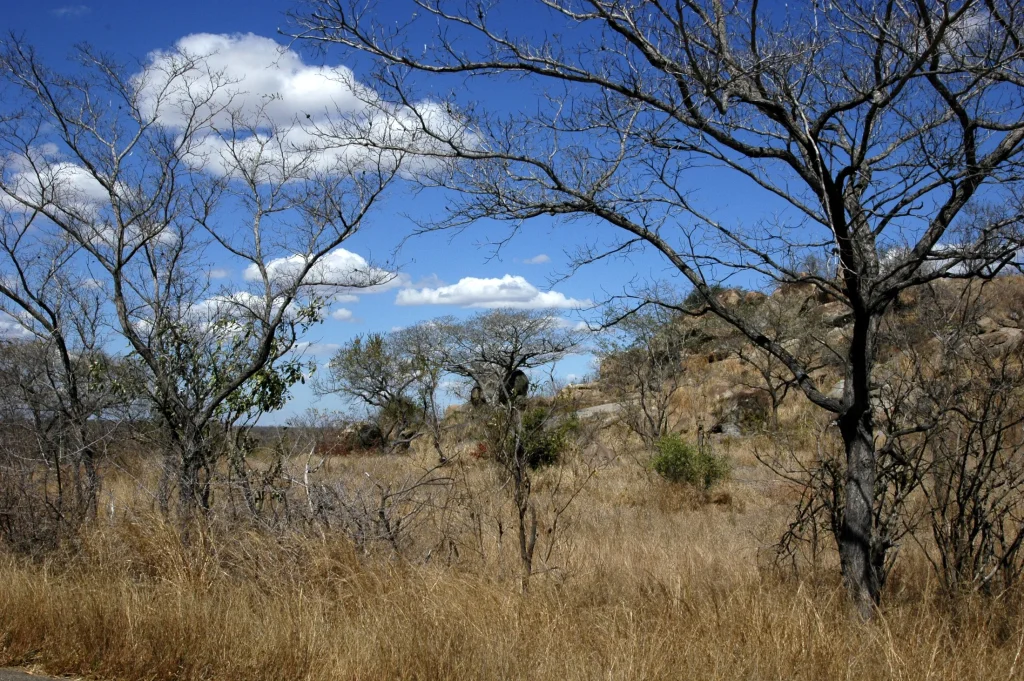

A quiet stretch of road still has something to show. The shape of a hill, the spacing between trees and a change in grass cover can make the next few kilometres feel different from the last. Kruger becomes more interesting when these ordinary transitions receive the same attention as an animal beside the road.
Start by describing what is visible. Is the ground open or enclosed? Are the trees tall and scattered, or low and closely spaced? Is a riverbed cutting through the scene? These observations do not require an instant species identification, and they help you ask better questions of a field guide or a reliable park reference.
Geology gives useful context
SANParks publishes maps connecting the park’s geology, soils and vegetation. These are a better foundation for understanding regional patterns than guessing from the colour of a roadside stone. Granite and basalt are useful distinctions, but neither word describes every detail of a landscape.
The official Satara account describes surrounding knob-thorn and marula savannah on basalt soils. It also points out changes toward other soils and the N’wanetsi area. That variation is a reminder to use camp names as starting points for orientation, rather than labels that flatten everything around them into one habitat.
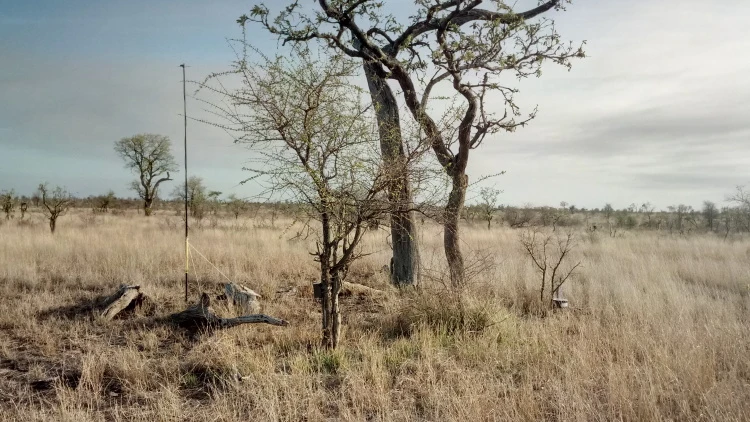
Observe before identifying
- Note broad structure: canopy height, tree spacing and ground cover.
- Look for watercourses and rock outcrops without assuming access.
- Record season and weather beside a photograph or written note.
- Use an official map or a knowledgeable guide to check an interpretation.
A distant photograph and a close botanical view answer different questions. One shows relationships across the landscape; the other may show a leaf edge or fruit that helps with identification. Avoid turning a single image into a claim about the whole park.
Keep the viewpoint honest
Research photographs on this site show specific sampled habitats. They are documentary references, not invitations to leave designated roads or enter a study site. Visitors should follow the park’s current access rules and instructions. A permitted viewpoint and a patient look from the vehicle are enough for a useful observation.
For a first visit, choose a manageable area around your booked camp and revisit it at a different allowed time. Familiarity helps you notice small changes that a long list of distant stops can hide. Continue with choosing a camp and our river-corridor guide.
Context: SANParks scientific maps and Satara’s landscape account.