
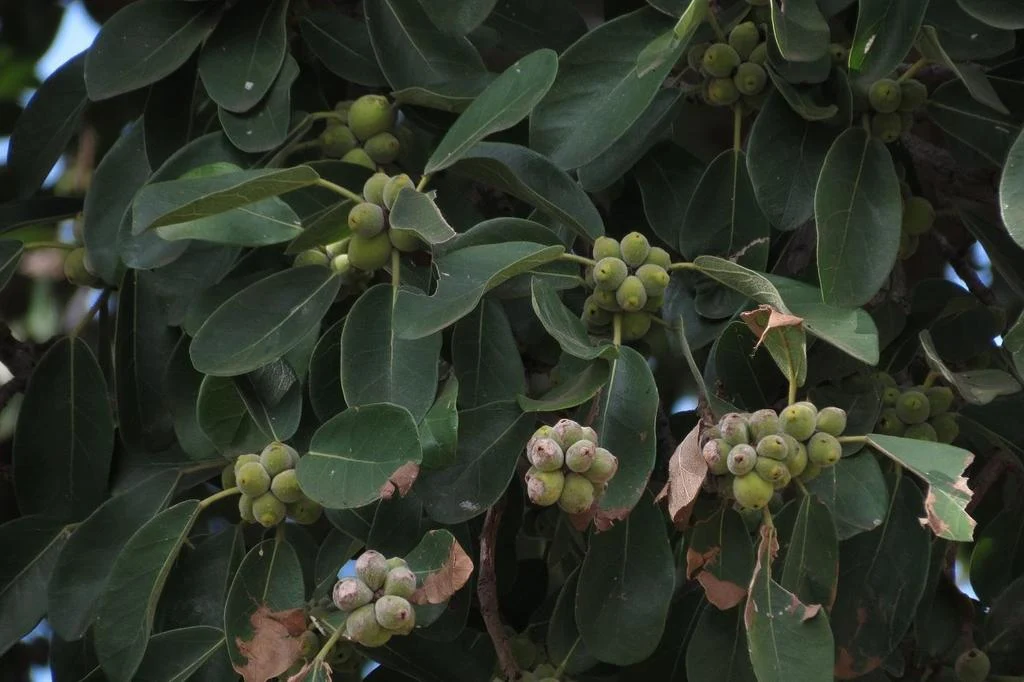

Plants are more than a background to a wildlife photograph. Their shapes help define a place, and the details of leaves, bark and fruit can reward a slower look. You do not need to identify everything to begin noticing what changes between a camp garden, a river corridor and open savannah.
The lowveld fig shown here is identified as Ficus stuhlmannii in Brian du Preez’s 2013 observation from the Satara area. The caption belongs to that photographed plant. It does not identify every similar tree in your own photographs, and it is not a nursery-stock or flowering-time promise.
Start with a description
Look at leaf arrangement, outline and texture before reaching for a name. If fruit or flowers are visible from a permitted position, note their form and where they sit on the plant. Keep the location and season with the observation. A close picture without that context can be surprisingly difficult to interpret later.
Leave the plant where it is. SANParks’ rules protect plants and natural material, including dry wood. Observation does not require collecting a leaf or seedpod, cutting a branch or stepping into an area closed to visitors. Follow staff instructions and use designated routes.
A botanical stop near Skukuza
SANParks describes the Skukuza Indigenous Plant Nursery as a collection of plants occurring in the park and surrounding region, with research and education among its purposes. Its staff and interpretation offer a different kind of park encounter from a long drive. Check the official nursery page for current access and visiting arrangements before making a special journey.
The nursery is also a reminder that botanical knowledge comes from careful, ongoing work. Credit the people and institutions providing that knowledge. This independent guide does not invent an interview with a botanist or imply that a photographed plant was grown at the nursery.
Keep a small observation record
- Write the actual camp, viewpoint or permitted road context.
- Describe visible features in ordinary language.
- Record the date and whether the plant has leaves, flowers or fruit.
- Check a reliable guide and keep uncertain identifications labelled uncertain.
For families or returning visitors, one well-described plant can be a more rewarding small project than a list of names. Compare it with the next plant you can safely see. The point is attention, not a score.
Continue with landscape observation and river corridors to connect the close detail with the wider view.
References: SANParks nursery account; credited lowveld-fig observation; park rules.